
15 Career Paths to Explore in the AI Era
Artificial intelligence is changing how work gets done, but promising career paths are not limited to technology. Healthcare, engineering, finance, education, and human services also offer opportunities worth exploring.
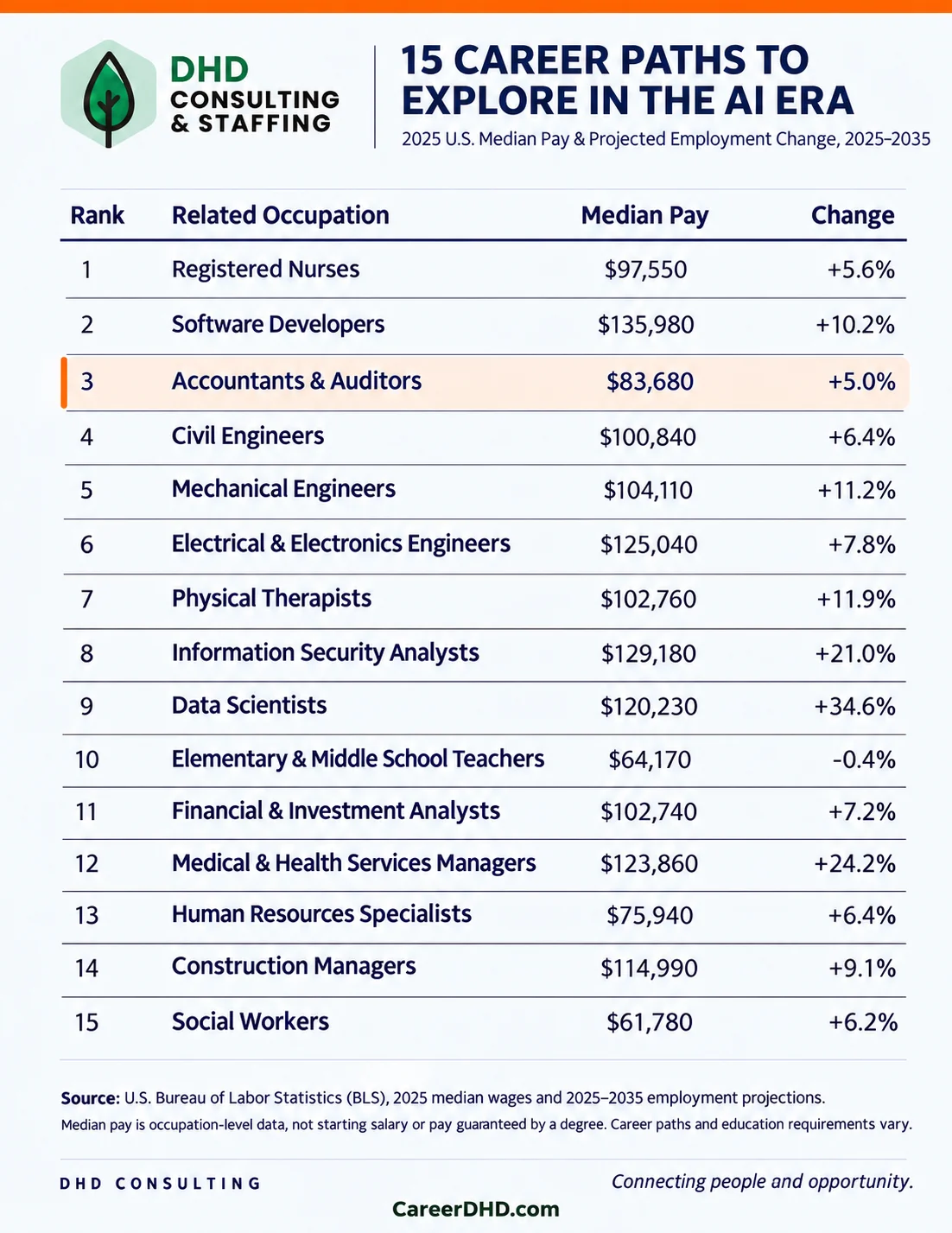
The latest U.S. Bureau of Labor Statistics (BLS) data pairs 2025 median pay with projected employment change from 2025 to 2035. Among the career paths in our infographic, data scientists have the highest projected growth at 34.6%. Medical and health services managers are projected to grow by 24.2%, and information security analysts by 21.0%. www.bls.gov
AI skills matter across many fields
Some of the fastest-growing roles involve data, software, and cybersecurity. But AI is also changing work in fields such as accounting. BLS notes that automation may take on routine accounting tasks, while accountants focus more on analysis, advice, and higher-level responsibilities. www.bls.gov
That pattern points to a broader lesson: learning to use AI tools can be valuable, but it works best alongside strong knowledge of a field. Communication, sound judgment, problem-solving, and the ability to adapt remain important across industries.
Read salary figures in context
The infographic lists median pay for occupations, not starting salaries or earnings guaranteed by a particular degree. For example, the 2025 median pay was $135,980 for software developers and $97,550 for registered nurses. A median means half of workers in that occupation earned more and half earned less. Actual pay can vary by location, experience, employer, and specialty. www.bls.gov
A college major also does not map to just one job. A computer science degree can lead to different roles, while many occupations require specific credentials, experience, or licenses. Before choosing a program, look at the requirements for the jobs you want and the opportunities in the places where you plan to work.
Choose a path with room to adapt
When comparing careers, consider the day-to-day work, education and licensing requirements, local hiring demand, and opportunities to gain hands-on experience. Ask how technology may change the role—and which human skills will continue to matter.
There is no single best career path for everyone. A strong choice connects your interests and strengths with realistic job requirements and a willingness to keep learning.
Explore the work behind the numbers. Build skills that travel with you. Make your next move with current information and a clear plan.
Data note: The figures shown are U.S. occupation-level median wages for 2025 and projected employment changes for 2025–2035. The infographic presents a selection of career paths, not a ranking by salary or growth.